Healthy nerves are crucial for everything from moving your feet to regulating your heartbeat. When nerve function falters—as in diabetic neuropathy—the consequences can range from pain and numbness to problems with digestion and even heart rhythm. Here’s what you need to know about nerve damage, especially for those with diabetes, and how you can protect and restore your nerve health.
What is Diabetic Neuropathy?
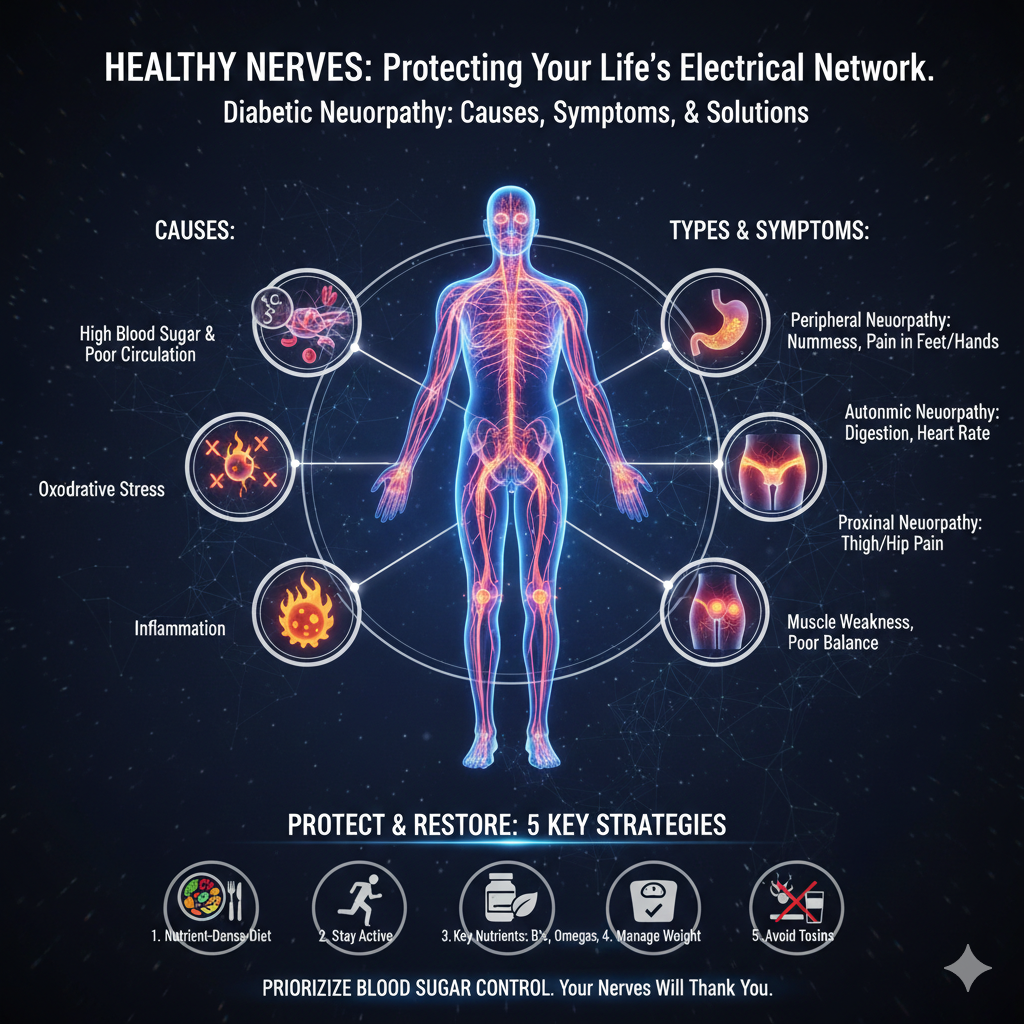
Diabetic neuropathy is nerve damage caused by high blood sugar levels, commonly among people with diabetes. Up to 50% of those with diabetes may develop some neuropathy during their lifetime.
Main types include:
Peripheral Neuropathy: Numbness, tingling, burning, and pain often beginning in the feet and hands.
Autonomic Neuropathy: Disrupts involuntary functions like heart rate, digestion, and bladder control.
Proximal Neuropathy: Causes pain and weakness, typically in the hips or thighs.
Focal Neuropathy: Affects a single nerve, often leading to sudden weakness or pain in places like the wrist, thigh, or eye.
Key Causes and Risk Factors
Chronic High Blood Sugar: Sustained hyperglycemia damages blood vessels supplying nerves, limiting oxygen and nutrients.
Oxidative Stress: Excess free radicals (reactive molecules) harm nerve cells—worse when blood sugar is high.
Inflammation: Chronic, low-level inflammation from diabetes or poor diet further damages nerve fibers and blocks blood flow.
Poor Circulation: Hardened or narrowed arteries from diabetes deprive nerves of vital oxygen.
Early Warning Signs to Watch For
Numbness, tingling (often in toes/feet first)
Burning, sharp pains (worse at night)
Weak muscles, poor balance
Heightened sensitivity or proneness to drop things
Trouble controlling involuntary functions (e.g., digestion, heart rate, bladder)
If you notice these, see your doctor promptly—early intervention is crucial.
Diet’s Role in Preventing and Managing Neuropathy
A nutrient-dense, low-carb diet is your best weapon:
Limits blood sugar spikes, reducing nerve stress
Lowers inflammation
Nutrient-rich foods supply key vitamins and antioxidants
Emphasize:
Non-starchy vegetables: Greens, broccoli, cauliflower for fiber and vitamins
Healthy fats: Fatty fish, eggs, avocados, olive oil—help dampen inflammation
High-quality protein: Fish, eggs, poultry for muscle and nerve support
Minimal processed foods: Cut out refined carbs, sugars, and seed oils
Key nutrients that support nerves:
Antioxidants (vitamins E, C; alpha-lipoic acid): Help neutralize free radicals
Omega-3 fatty acids: Combat inflammation and support nerve repair
B-vitamins (especially B1/thiamine, B6, B12): Essential for nerve healing and signaling
Lifestyle and Management Strategies
Keep blood sugar stable: Through smart nutrition, daily movement, and (if needed) medication.
Stay active: Regular walking, strength-training, or yoga improves circulation and may aid nerve regeneration
Manage weight: Less body fat relieves pressure on nerves and reduces inflammation
Avoid smoking and excess alcohol: Both harm nerves directly and indirectly (reducing blood flow and key nutrients)
Wise supplementation: Key options include alpha-lipoic acid, B-vitamins, and omegas—but always consult a healthcare provider before starting supplements
Takeaway: Prevention is Everything
Catch problems early—know the warning signs
Adopt a low-carb, nutrient-dense diet with plenty of antioxidants and healthy fats
Stay active, manage weight, and protect your nerves from toxins
If you have diabetes, prioritize blood sugar control
Nerve damage isn’t inevitable. With smart strategies, you can protect your nerves, ease discomfort, and maintain a vibrant, active life.
References
- Callaghan, B. C., Cheng, H. T., Stables, C. L., Smith, A. L., & Feldman, E. L. (2012). Diabetic neuropathy: Clinical manifestations and current treatments. The Lancet Neurology, 11(6), 521-534.
- Brownlee, M. (2001). Biochemistry and molecular cell biology of diabetic complications. Nature, 414(6865), 813-820.
- Vincent, A. M., & Feldman, E. L. (2004). New insights into the mechanisms of diabetic neuropathy. Rev Endocr Metab Disord, 5(3), 227-236.
- Tesfaye, S., & Selvarajah, D. (2012). Advances in the epidemiology, pathogenesis and management of diabetic peripheral neuropathy. Diabetes Metab Res Rev, 28(8), 8-14.
- Veves, A., Backonja, M., & Malik, R. A. (2008). Painful diabetic neuropathy: Epidemiology, natural history, early diagnosis, and treatment options. Pain Medicine, 9(6), 660-674.
- Feinman, R. D., Pogozelski, W. K., Astrup, A., Bernstein, R. K., Fine, E. J., Westman, E. C., … & Worm, N. (2015). Dietary carbohydrate restriction as the first approach in diabetes management: Critical review and evidence base. Nutrition, 31(1), 1-13.
- Barnett, M., & Young, C. (2012). Antioxidant treatment in diabetic neuropathy: An update. J Neurochem, 121(4), 568-580.
- Ziegler, D., & Reljanovic, M. (1999). Alpha-lipoic acid in the treatment of diabetic polyneuropathy in Germany: Current evidence from clinical trials. Exp Clin Endocrinol Diabetes, 107(7), 421-430.
- Li, F., Zhang, Z., Wang, B., Chen, L., & Ling, W. (2015). Dietary intake of n-3 polyunsaturated fatty acids and risk of diabetic nephropathy in patients with type 2 diabetes: A prospective cohort study. Journal of Human Nutrition and Dietetics, 28(1), 57-63.
- Wang, H., & Sun, X. (2015). Effects of vitamin B12 on nerve repair and regeneration: A systematic review. Neural Regen Res, 10(12), 2058-2064.
- Ceriello, A. (2005). Postprandial hyperglycemia and diabetes complications: Is it time to treat? Diabetes, 54(1), 1-7.
- White, C. M., Pritchard, J., & Turner-Stokes, L. (2004). Exercise for people with peripheral neuropathy. Cochrane Database Syst Rev, (4).
- Boulton, A. J. M., Armstrong, D. G., Albert, S. F., Frykberg, R. G., Hellman, R., Kirkman, M. S., & Jeffcoate, W. J. (2008). Comprehensive foot examination and risk assessment. Diabetes Care, 31(8), 1679-1685.
- Hendrickson, S. H., Kocolas, I., & Jacobson, A. F. (2009). Smoking cessation and peripheral neuropathy in patients with type 2 diabetes mellitus. Mayo Clinic Proceedings, 84(6), 490-496.
- Baron, R., & Binder, A. (2004). Pharmacological therapy of diabetic neuropathy. J Clin Invest, 113(8), 1154-1161.