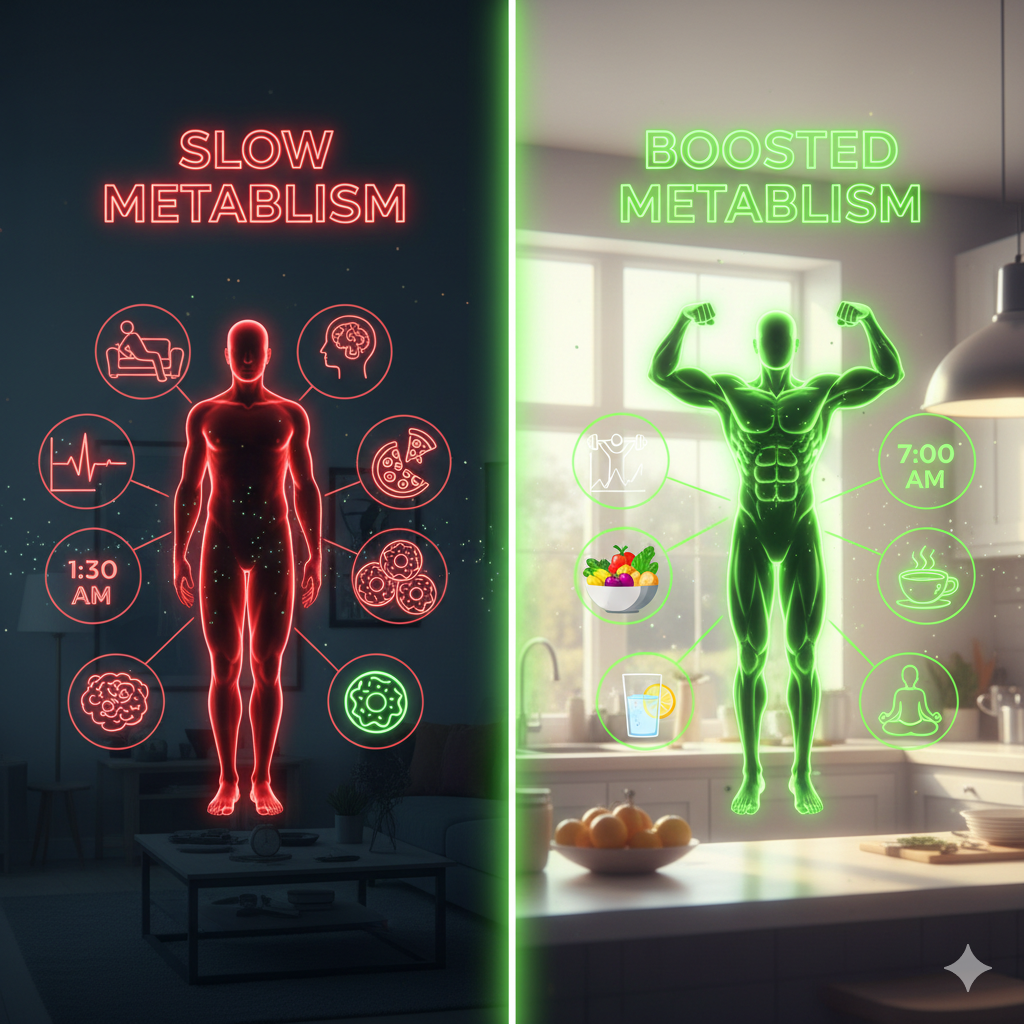
Metabolism is your body’s engine, converting food and drink into energy. While age and genetics play a role, there’s plenty you can do to turn up your calorie-burning power and support both health and weight control. Here are ten research-supported strategies you can start today.
1. Build Lean Muscle with Strength Training
Muscles burn more calories than fat. Regular strength training (weights, resistance bands, bodyweight exercises) helps you add lean muscle mass, upping your resting metabolic rate—even while you’re at rest.
2. Try High-Intensity Interval Training (HIIT)
HIIT alternates intense bursts of activity with short rest intervals. This not only torches calories during workouts but also boosts your metabolism and fat-burning capacity for hours after you finish.
3. Prioritize Quality Sleep
Sleep deprivation disrupts hormones that regulate hunger, appetite, and metabolism. Aim for 7-9 hours of restorative sleep each night to balance hormones and keep your metabolism efficient.
4. Drink More Water
Hydration is key for all cellular processes, including metabolism. Drinking water can temporarily boost your metabolic rate by up to 30% and helps your kidneys detoxify your body.
5. Eat More Protein
Digesting and metabolizing protein burns more calories than carbs or fat—a phenomenon known as the Thermic Effect of Food (TEF). High-protein meals also help curb appetite and preserve lean muscle during weight loss.
6. Embrace Cold Exposure
Cold can activate brown adipose tissue (BAT), a type of fat that burns calories to generate heat. Try cold showers, brisk walks in cool weather, or an occasional plunge in a cold pool to stimulate metabolism.
7. Experiment with Intermittent Fasting
Time-restricted eating can improve insulin sensitivity, boost metabolic flexibility, trigger beneficial cellular processes (like autophagy), and promote fat loss.
8. Add a Little Spice
Capsaicin, the “heat” in chili peppers, has a mild metabolism-boosting effect. Adding hot sauce, cayenne, or peppers to your meals can help raise your calorie burn slightly and add flavor.
9. Manage Stress
Chronic stress raises cortisol, prompting fat storage (especially in the belly) and slowing your metabolism. Combat stress with mindful practices, deep breathing, nature walks, or yoga.
10. Choose Low-Glycemic, Whole Foods
Refined carbs and sugary foods spike insulin and promote fat storage. Instead, focus on lean protein, healthy fats, non-starchy vegetables, and low-sugar fruits to keep your metabolism humming.
In Summary
You can rev up your metabolism—naturally. Combine regular strength and HIIT workouts, smart nutrition, hydration, restorative sleep, and stress management for a powerful metabolic boost. Start with one or two habits today and build from there—your energy, waistline, and long-term health will thank you!
References
- Melov, S., Tarnopolsky, M. A., Beckman, K., Felkey, K., & Hubbard, A. (2007). Resistance exercise reverses aging in human skeletal muscle. Journal of Applied Physiology, 105(6), 1677-1685.
- Boutcher, S. H. (2011). High-intensity intermittent exercise and fat loss. Journal of Obesity, 2011.
- Boutcher, S. H. (2010). High-intensity intermittent exercise and fat loss. Journal of Obesity, 2011.
- Taheri, S., Lin, L., Austin, D., Young, T., & Mignot, E. (2004). Short sleep duration is associated with reduced leptin, elevated ghrelin, and increased body mass index. PLoS medicine, 1(3), e62.
- Boschmann, M., Steiniger, J., Hille, U., Tank, J., Adams, F., Sharma, A. M., … & Jordan, J. (2003). Water-induced thermogenesis. The Journal of Clinical Endocrinology & Metabolism, 88(12), 6015-6019.
- Westerterp, K. R., Wilson, S. A. J., & Rolland, V. (1999). Diet induced thermogenesis measured over 24h in a respiration chamber: effect of diet composition. International Journal of Obesity, 23(3), 287-292.
- Aaron M. Cypess, Seda Kurdak, Geoffrey J. Haft, et al. “Identification and Importance of Brown Adipose Tissue in Adult Humans.” Journal of Clinical Endocrinology & Metabolism, vol. 96, no. 2, pp. 382–387, 2011.
- Mark P. Mattson, Valter D. Longo, Michelle Harvie, et al. “Impact of intermittent fasting on health and disease processes.” New England Journal of Medicine, vol. 381, no. 26, pp. 2541–2551, 2019.
- Yoshioka, M., St-Pierre, S., Drapeau, V., Dionne, I., Doucet, E., Suzuki, M., & Tremblay, A. (1999). Effects of red pepper on appetite and energy intake. British Journal of Nutrition, 82(2), 115-123.
- Epel, E., Lapidus, R., McEwen, B., & Brownell, K. (2001). Stress may add bite to appetite in women: a laboratory study of stress-induced cortisol and eating behavior. Psychoneuroendocrinology, 26(1), 37-49.
- Ludwig, D. S., & Ebbeling, C. B. (2018). The carbohydrate-insulin model of obesity: beyond “calories in, calories out”. JAMA internal medicine, 178(8), 1098-1103.