How It Works and Why It’s Effective
Low-carb diets have been a popular weight loss strategy for decades, but today’s science shows they’re much more than a passing trend. By shifting your metabolism away from carbohydrates and toward fat-burning, low-carb diets help you lose weight—often without chronic hunger or strict calorie counting.
What Is a Low-Carb Diet for Weight Loss?
A low-carb diet reduces your intake of sugars and starches—think bread, pasta, and sweets—while emphasizing protein, healthy fats, and non-starchy vegetables. Instead of relying on carbs for energy, your body learns to burn stored fat, helping you slim down and feel satisfied.
Unlike typical calorie-restricted diets, the low-carb approach changes your body’s entire energy strategy, making weight loss easier and more sustainable.
Why Do People Choose Low-Carb for Weight Loss?
Beyond weight loss, low-carb diets offer:
Reduced belly (visceral) fat that’s linked to many chronic diseases
Lower blood sugar levels, ideal for managing type 2 diabetes
Improved cholesterol: higher HDL (“good”) cholesterol and lower triglycerides
Reduced blood pressure and systemic inflammation for better heart health
Low-Carb Eating Basics
Low-carb meal plans cut out or minimize:
Sugar, white bread, pasta, pastries
Starchy vegetables (potatoes, corn)
Processed snack foods
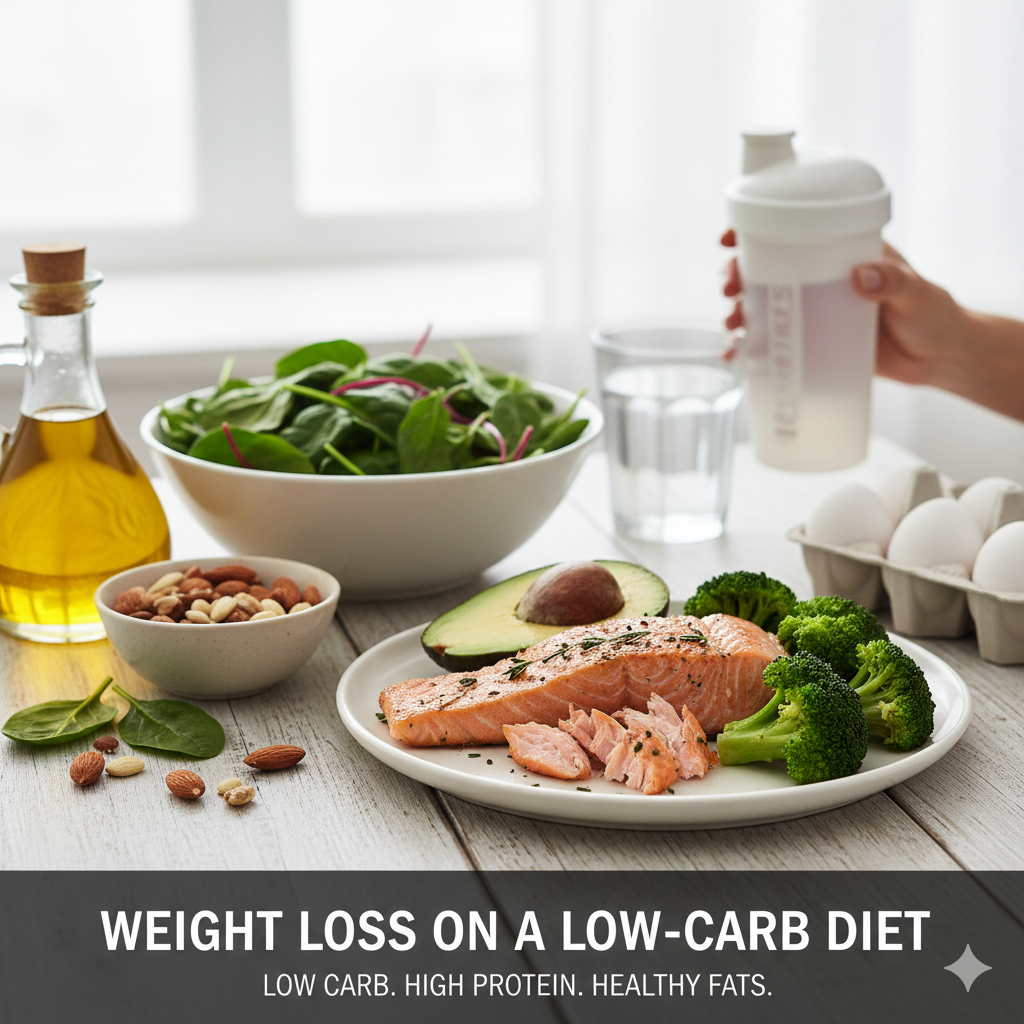
Instead, you’ll focus on:
Meats, fish, and eggs
Non-starchy vegetables (broccoli, spinach, zucchini)
Healthy fats (avocado, olive oil, nuts, seeds)
Carb intake drops to 20–57 grams per day—compared to a standard diet where carbs may account for 45-65% of total calories.
Why Low-Carb Diets Work
Lower Insulin = Increased Fat Burning
Carbs raise insulin, which signals the body to store fat. A low-carb diet lowers insulin, unlocking fat for energy.
Quick Water Weight Loss
Carb reduction drains glycogen (stored sugar) and water, leading to rapid initial results on the scale.
Natural Appetite Suppression
High protein foods, healthy fats, and ketosis reduce hunger hormones—so you eat less without feeling deprived.
Simpler Food Choices, Fewer Cravings
Eliminating sugary, starchy foods naturally limits calories—junk food is off the table.
Muscle-Sparing, Metabolism-Boosting
Higher protein helps you maintain muscle while losing weight, and increases calorie burn through digestion (“thermic effect”).
Short-Term and Long-Term Benefits
Multiple studies show:
Faster initial weight loss than low-fat diets
Greater reduction in dangerous visceral (belly) fat
Sustained improvements in cholesterol, blood pressure, and blood sugar control
Reduced risk of metabolic disease
Risks & How to Avoid Them
No diet is perfect—plan wisely to stay healthy:
Constipation: Eat plenty of fiber-rich veggies.
Dehydration: Drink at least 2 quarts of water per day.
Vitamin gaps: Consider supplements for potassium, calcium, or B vitamins.
Bad breath: Ketosis can cause “fruity” breath; more water may help.
Frequently Asked Questions
What role does protein play in a low-carb diet?
Protein reduces hunger, maintains muscle mass, and boosts your metabolism. Blends of whey, egg white, and collagen proteins deliver balanced nutrition to support your weight loss goals.
Can protein shakes help with weight loss?
Yes! Protein shakes provide a convenient, nutritious option with enough protein and healthy fat to support satiety, energy, and minimize carb cravings.
Are protein shakes suitable for diabetics?
Most high-protein, low-carb shakes (especially with whey, egg, or collagen protein) can help manage blood sugar. Always check with your doctor before making changes.
How do high-quality protein shakes differ from other meal replacements?
Quality shakes use real, nutrient-dense proteins and fats, avoiding cheap fillers, excess carbs, and artificial additives.
Key Takeaways
Low-carb diets accelerate weight loss by lowering insulin, boosting fat burning, and curbing appetite.
They are effective for metabolic health but require smart planning—eat plenty of protein, fiber-rich veggies, and stay hydrated.
Protein shakes that use quality ingredients can enhance your low-carb journey by supporting satiety and muscle health.
Ready to try a low-carb lifestyle? Focus on whole foods, stay hydrated, and enjoy every step toward a leaner, healthier you!