
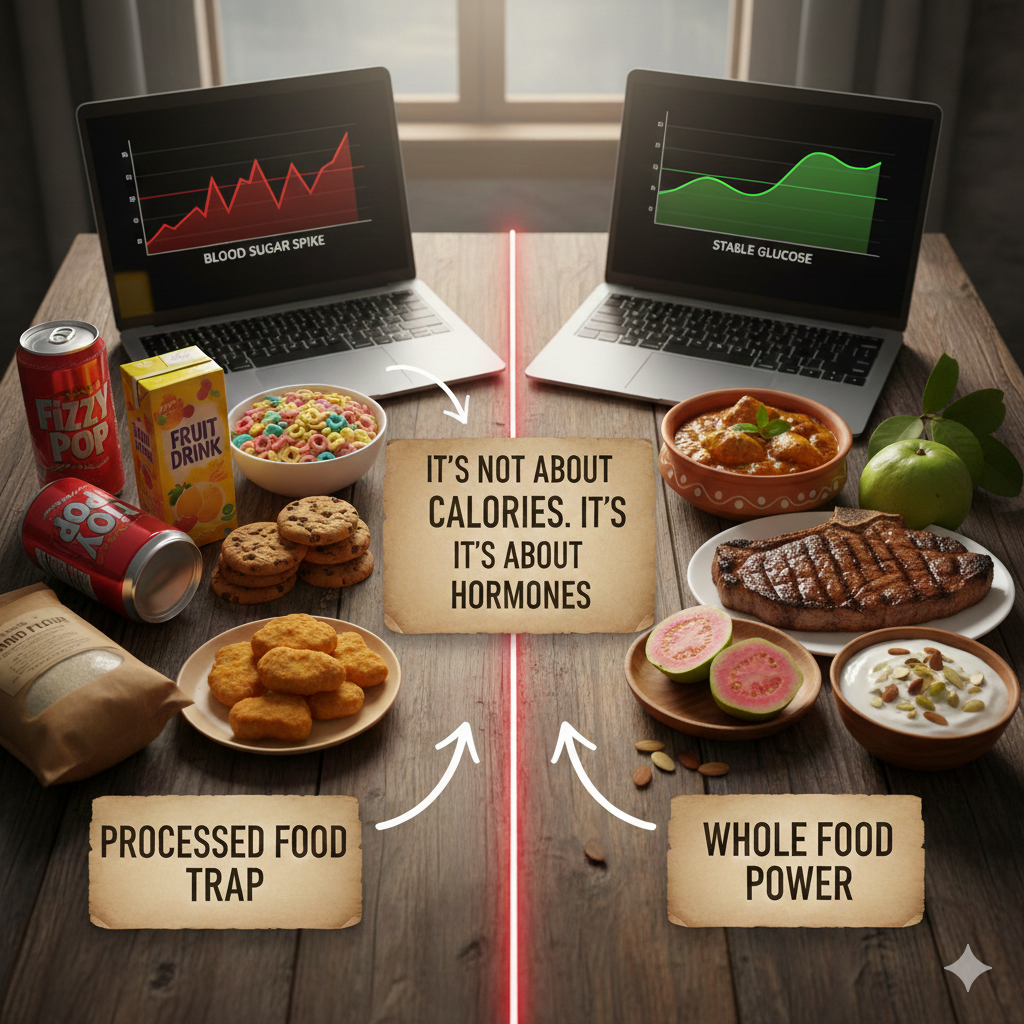
Eating whole foods isn’t “clean eating.”
It’s metabolic control.
Their natural structure slows digestion, stabilizes blood sugar, and reduces overeating — which is critical for:
Low-carb success
Type 2 diabetes management
Hyperinsulinemia
Fat loss without starvation
🔬 Beyond Calories: Hormones Decide
Calories don’t act alone. Hormones decide where energy goes.
100 calories of cookies ≠ 100 calories of salmon.
Same energy.
Very different hormonal response.
Refined carbs → rapid glucose rise → high insulin → fat storage
Protein + fat → slower absorption → lower insulin → better satiety
Even carbohydrates differ based on:
Glycemic index
Fiber content
Food structure
Meal order (protein and salads first blunts glucose rise)
Vinegar or lemon added
Same starch. Different glucose response.
🧠 The Food Matrix Effect (Why Structure Matters)
An apple vs apple juice proves the point.
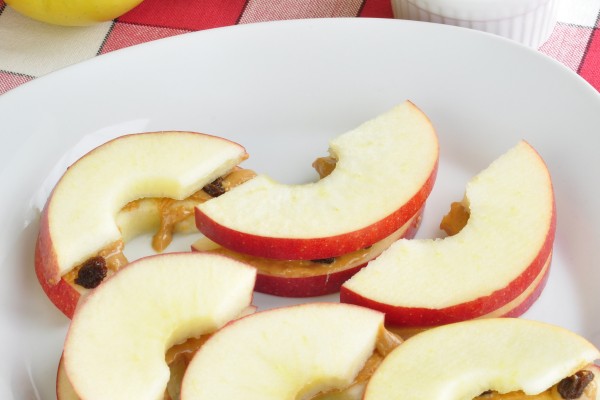


Even when matched for:
Calories
Carbs
Fiber
Whole apple slices:
Slower gastric emptying (~65 min half-emptying)
Greater satiety
Reduced later intake (~187 fewer calories at next meal)
Juice:
Faster emptying (~38 min)
Rapid glucose rise
No meaningful appetite suppression
Why?
Blending = mechanical pre-digestion.
You destroy the natural matrix.
Absorption speeds up. Hormonal signaling shifts.
The stomach stretches more with intact food.
GLP-1 and satiety hormones rise more steadily.
Insulin spikes are lower and slower.
For insulin-resistant patients, this difference is massive.
Low-Carb, Whole-Food — Pakistani Style
You don’t need exotic superfoods.
Just stick to nature’s packaging.



| Processed Trap | Whole Swap | Why It Wins (Hormonal Edge) |
|---|---|---|
| Apple juice | Whole guava | Slower emptying, better GLP-1 |
| Bread naan | Almond flour or low-carb roti | Lower glucose spike |
| Store biryani | Home meat sabzi | No hidden seed oils, better satiety |
| Breakfast cereal | Full-fat dahi + nuts | Stable energy, fewer crashes |
| Nuggets | Whole chicken nuggets | Protein-driven satiety |
For Diabetes Families
Whole foods:
Reduce glucose volatility
Lower insulin demand
Improve satiety signaling
Reduce inflammatory load
They don’t just “reduce calories.”
They reduce chaos.
And metabolic stability is everything.
Simple Rule
If it needed:
A factory
A box
A long ingredient list
Or a blender to resemble food
It’s probably metabolically weaker than its intact version.
Start with one swap per day.
One meal.
One structure change.
One hormonal shift.
That’s how metabolic flexibility is rebuilt.
References
- https://www.nutrisense.io/blog/low-carb-diet-benefits-risks-guide
- https://www.ncbi.nlm.nih.gov/books/NBK537084/
- https://pharmaceutical-journal.com/article/news/low-carb-diet-sends-nearly-half-of-type-2-diabetes-patients-into-remission-in-small-research-study
- https://www.ncbi.nlm.nih.gov/pmc/articles/PMC2664987/pdf/nihms97426.pdf
- https://www.sciencedirect.com/science/article/pii/S0022316622023586#:~:text=Conclusions%3A,relevant%20for%20subsequent%20food%20consumption