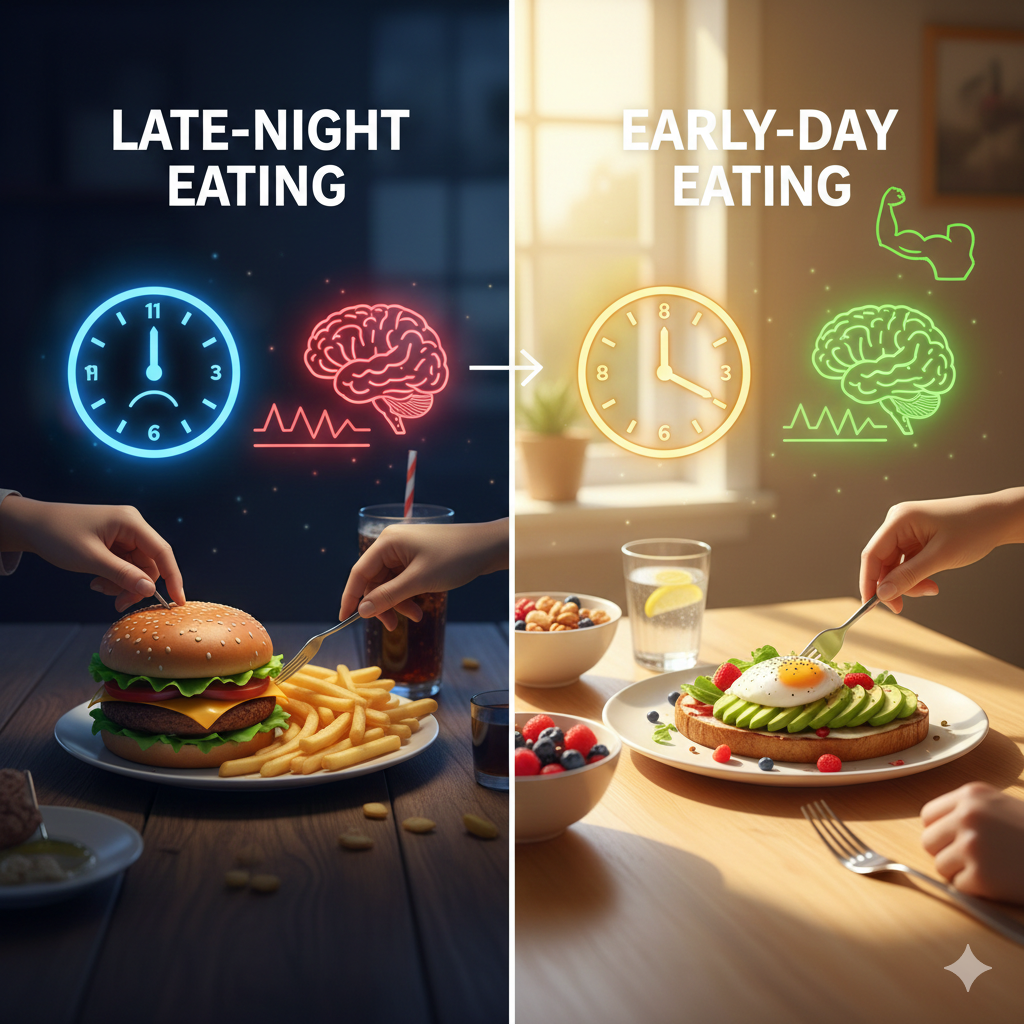
It’s not just what’s on your plate that matters—when you eat may have a big impact on your health, weight, and energy. Recent research highlights that our bodies process food differently if we eat early in the day versus late at night. Let’s explore how meal timing fits into your wellness plan.
Your Body’s Internal Clock and Metabolism
Our bodies run on a 24-hour circadian rhythm—an internal clock that controls sleep, hormones, and yes, how we burn and store food. Understanding this rhythm helps explain why the timing of your meals can make a surprising difference.
The Benefits of Early-Day Eating
Eating a hearty breakfast or lunch aligns with your body’s natural rhythm, as your metabolism is typically more active in the morning. Studies show that consuming bigger meals earlier in the day:
Supports healthy metabolism and better blood sugar control
Improves insulin sensitivity
Reduces the risk for weight gain, diabetes, and other metabolic diseases
Risks of Late-Night Eating
On the flip side, eating large meals late in the evening or night does the opposite:
Your body is less equipped to handle and metabolize nutrients at night
Late eating is linked to higher blood sugar, more fat storage, and weight gain
It can disrupt your sleep, further worsening metabolic health
Weight Management and Meal Timing
People who consume most of their calories earlier in the day tend to have lower body weight and see more consistent long-term results with weight loss. Early meals promote fullness and stable appetite hormones, while late meals often mean overeating and higher cravings.
One study even found that dieters who made dinner their largest meal lost less weight and had worse insulin resistance than those who ate more for breakfast or lunch.
How to Optimize Your Eating Schedule
Front-load your calories: Have a substantial breakfast and lunch, keep dinner lighter.
Aim to finish eating earlier in the evening, ideally a few hours before bedtime.
Maintain consistent meal times to help set your body’s internal clock.
Plan ahead to avoid late-night snacking.
If you’re not sure what’s right for your schedule or health conditions, consult a registered dietitian or your healthcare provider for personalized advice.
Bottom Line
Meal timing matters. Eating earlier in the day, when your metabolism is most active, supports stable blood sugar, easier weight management, and better sleep. Minimizing late-night meals helps keep your body in sync and reduces the risk of metabolic issues. Try adjusting when you eat—not just what you eat—and enjoy the benefits to your energy, waistline, and overall well-being.
References
- Tahara, Y., & Shibata, S. (2016). Chrono-biology, chrono-pharmacology, and chrono-nutrition. Journal of Pharmacological Sciences, 132(4), 241–247.
- Betts, J. A., Richardson, J. D., Chowdhury, E. A., Holman, G. D., Tsintzas, K., & Thompson, D. (2014). The causal role of breakfast in energy balance and health: A randomized controlled trial in obese adults. The American Journal of Clinical Nutrition, 100(2), 539–547.
- Mekary, R. A., Giovannucci, E., Willett, W. C., van Dam, R. M., & Hu, F. B. (2012). Eating patterns and type 2 diabetes risk in men: Breakfast omission, eating frequency, and snacking. The American Journal of Clinical Nutrition, 95(5), 1182–1189.
- Bandín, C., Scheer, F. A. J. L., Luque, A. J., Ávila-Gandía, V., Zamora, S., Madrid, J. A., & Garaulet, M. (2013). Meal timing affects glucose tolerance, substrate oxidation and circadian-related variables: A randomized, crossover trial. International Journal of Obesity, 37(8), 1084–1091.
- Morris, C. J., Yang, J. N., Garcia, J. I., Myers, S., Bozzi, I., Wang, W., Buxton, O. M., Shea, S. A., & Scheer, F. A. J. L. (2015). Endogenous circadian system and circadian misalignment impact glucose tolerance via separate mechanisms in humans. Proceedings of the National Academy of Sciences of the United States of America, 112(17), E2225–E2234.
- St-Onge, M.-P., & Shechter, A. (2014). Sleep disturbances, body fat distribution, food intake and/or energy expenditure: Pathophysiological aspects. Hormones, 13(4), 427–438.
- Garaulet, M., Gómez-Abellán, P., Alburquerque-Béjar, J. J., Lee, Y.-C., Ordovás, J. M., & Scheer, F. A. J. L. (2013). Timing of food intake predicts weight loss effectiveness. International Journal of Obesity, 37(4), 604–611.
- Jakubowicz, D., Barnea, M., Wainstein, J., & Froy, O. (2013). High caloric intake at breakfast vs. dinner differentially influences weight loss of overweight and obese women. Obesity, 21(12), 2504–2512.
- Jakubowicz, D., Wainstein, J., Ahrén, B., Bar-Dayan, Y., Landau, Z., Rabinovitz, H. R., & Froy, O. (2015). High-energy breakfast with low-energy dinner decreases overall daily hyperglycaemia in type 2 diabetic patients: A randomised clinical trial. Diabetologia, 58(5), 912–919.