
Trillions of microbes live in your gut.
Collectively, they carry far more genes than you do.
And they don’t just digest food.
They influence:
Hunger signals
Satiety hormones
Mood
Inflammation
Even food preferences
Cravings aren’t always “weak willpower.”
Sometimes, they’re microbial signaling.
🦠 The Microbes’ Hidden Agenda
Different bacteria thrive on different fuels:
Bifidobacteria → fiber
Butyrate-producers → resistant starch + plant fibers
Certain opportunistic Proteobacteria → thrive in low-diversity, inflammatory guts
Low-diversity microbiomes are commonly observed in:
Obesity
Insulin resistance
Chronic inflammation
Studies show:
Obese twins often have less microbial diversity than lean twins
Specific microbial metabolites differ in people with strong chocolate cravings
Certain probiotic strains improve insulin sensitivity and reduce visceral fat (strain-specific effects)
Culture shapes microbes:
Rural African children eating sorghum develop fiber-degrading species
Japanese populations harbour bacteria capable of digesting seaweed polysaccharides
Your diet trains your microbiome.
🧠 Gut–Brain Signaling Is Real

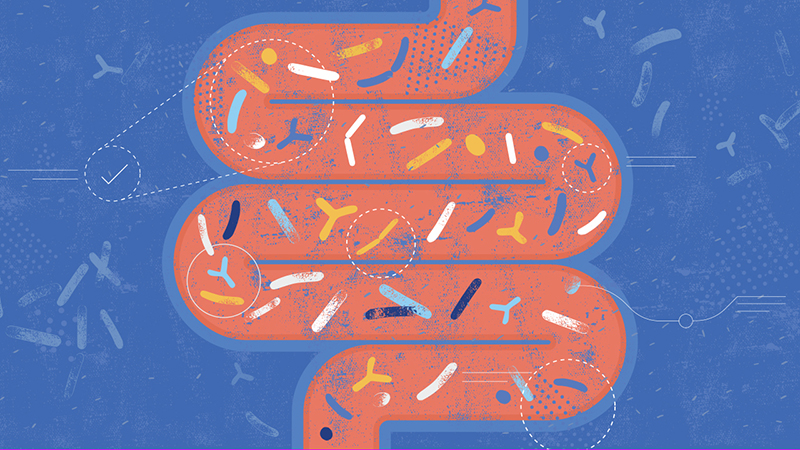

Gut bacteria communicate through:
Short-chain fatty acids (like butyrate)
Neurotransmitter precursors
Vagus nerve signaling
Hormones like GLP-1 and PYY
Higher microbial diversity is associated with:
Better satiety signaling
More stable glucose responses
Lower inflammatory markers
Lower diversity is linked with:
Increased appetite dysregulation
Carb cravings
Metabolic instability
This doesn’t mean bacteria “control” you —
but they influence the hormonal environment that shapes appetite.
Low-Carb Gut Hacks (Pakistani Style)
Instead of feeding sugar-loving microbes, nourish diversity.



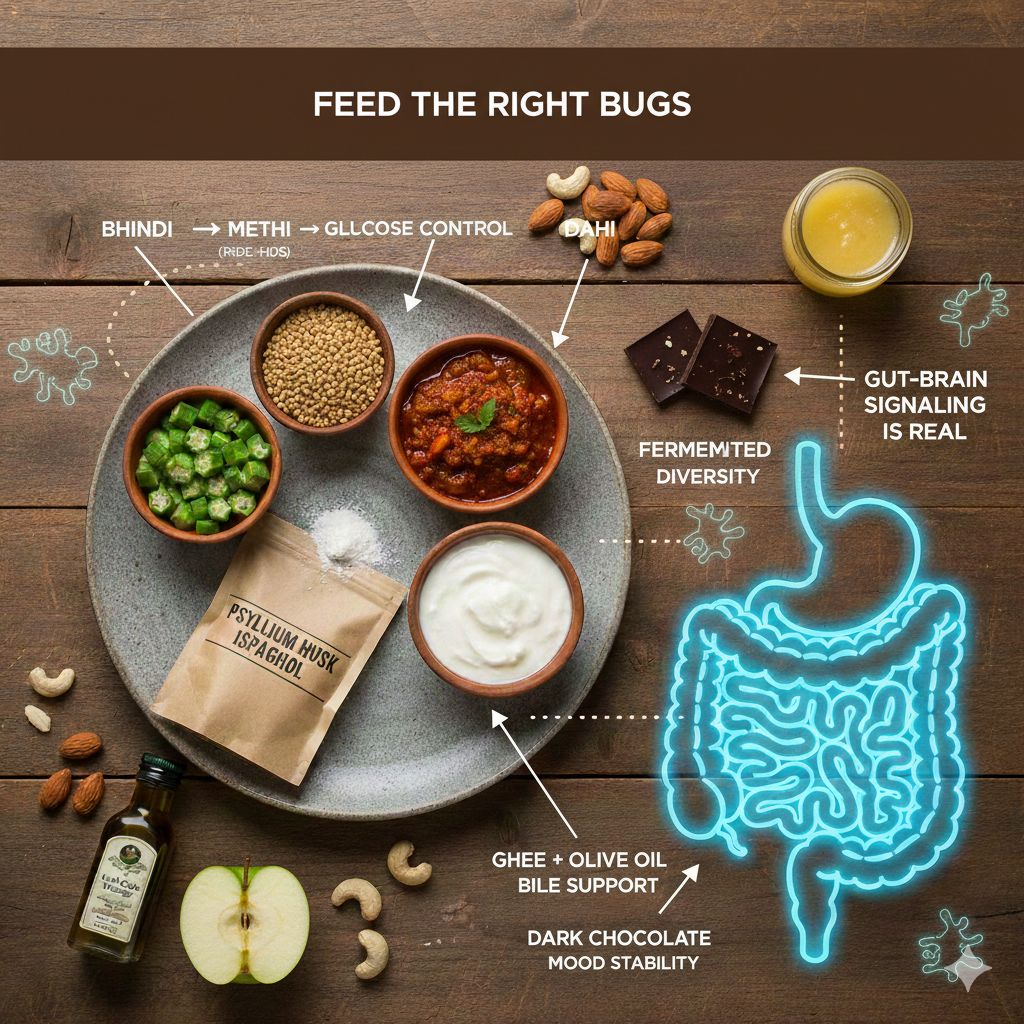
Feed the Right Bugs:
✔ Bhindi (okra) → soluble fiber
✔ Methi (fenugreek) → galactomannan fiber, glucose control support
✔ Psyllium husk (ispaghol) → increases butyrate production
✔ Full-fat dahi → natural fermented bacteria
✔ Homemade achaar (limited oil) → fermented diversity
✔ Ghee + olive oil → support bile-tolerant beneficial species
Cravings & Microbiome Shifts
| Craving Pattern | Possible Microbial Pattern | Whole-Food Fix |
|---|---|---|
| Sugar binges | Low fiber diversity | Dahi + methi seeds |
| Constant carb hunger | Low satiety signaling | Okra + meat |
| Chocolate pull | Dopamine seeking | 85% dark chocolate + nuts |
| Post-meal crash | Poor glucose stability | Apple cider vinegar before meals |
(These are patterns, not diagnoses — individual variation matters.)
Diabetes Connection
For type 1 and type 2 management:
A diverse microbiome may:
Improve GLP-1 signaling
Reduce gut permeability
Lower systemic inflammation
Enhance insulin sensitivity
Low-carb whole-food patterns often:
Reduce glucose spikes
Increase butyrate-producing bacteria
Improve metabolic flexibility
In children with gut sensitivity or colic history, diversity stabilization often parallels improved symptom stability.
Important Clarifications
Not all Lactobacillus strains reduce fat — effects are strain-specific.
Probiotics are supportive, not magic.
Diversity comes primarily from whole-food fiber, not capsules.
Completely eliminating carbs long-term may reduce certain beneficial species — strategic fiber inclusion matters.
The Simple Rule
Feed microbes like you’d feed a garden.
Remove:
Ultra-processed carbs
Industrial seed oils
Artificial additives
Add:
Whole vegetables
Fermented foods
Traditional fats
Time-restricted eating (if appropriate)
As diversity improves, cravings often calm.
Not through force.
Through biology.
References
- https://pubmed.ncbi.nlm.nih.gov/25103109/